California Indian Education Top 10 is not so much about defining the Top Ten Native American Indians in American history, but it is about beginning a series about Indian leaders and what they are know for.
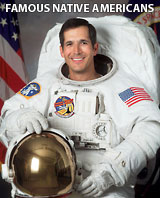
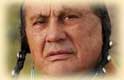
JOHN HERRINGTON, Astronaut
NASA Astronaut
John Herrington, Chickasaw
1958-
JOHN BENNETT HARRINGTON
Navy Commander John B. Harrington is the first tribally-enrolled Native American Indian Astronaut to fly in outer space. During NASA flight STS-113 aboard the Space Shuttle Endeavor in November 2002, Mission Specialist 2 Harrington docked the space shuttle to the International Space Station and became the first American Indian to walk in outer space.
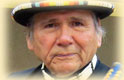
Rupert Costo (1906-1989) and Jeannette Henry Costo (1909-2001) spent their adult lives advocating on behalf of American Indians.
"They both had a passionate interest in championing the causes of education, and an even greater interest in championing the causes of Native Americans."
- Jim Erickson, a former UCR Vice Chancellor and a longtime friend of the Costos.
Rupert Costo was of the Cahuilla tribe from Anza. A fine athlete in his youth, Rupert Costo briefly played semiprofessional basketball.
During the late 1920s, he attended Riverside City College and then worked successfully as a highway engineer, hydrologist, meteorologist, and surveyor before becoming a historian, author, publisher, researcher, and speaker.
A tribal spokesman for eight years, he helped found an electrical cooperative in Anza, the Anza Farm Bureau, the Anza Soil Conservation District, and the Riverside Farm Bureau.
The Indian Historian Press
American Indian Historical Society
Costo Library of the American Indian and Costo Archive
Costo Chair of American Indian Affairs
COSTO BOOKS
Natives of the Golden State: The California Indians (1995) Indian Voices: The Native American Today (1974) The Missions of California: A Legacy of Genocide (1987) Indian Treaties: Two Centuries of Dishonor (1977) A Thousand Years of American Indian Storytelling (1981)
In addition, Rupert Costo co-edited Textbooks and the American Indian (1970) while Jeannette Costo edited The American Indian Reader (1972).
- Submitted by Ernie Salgado Jr., Ahmium Education, Inc.
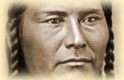
ISHI, Yahi (Yana People of California)
The last Yahi
Ishi
C. 1860-1916
Ishi, the last Yahi Indian
Rup.
"Ishi: A Story of Hope and Courage"
-California Indian Museum and Cultural Center CIMCC
Among California Indians, none have figured more prominently in the public eye than Ishi. When Ishi arrived out of the foothills of Northern California into the town of Oroville in 1911, he was mistakenly characterized as a “wild” and “primitive” Indian, the “last of a Stone Age tribe”.
These assumptions caused him to be brought to the University of California, Museum of Anthropology in San Francisco as a research subject by anthropologist, Alfred Kroeber.
Ishi remained at the museum and shared cultural and historical information with scientists and the public during his five-year residence. He passed away in 1916 after having contracted tuberculosis while in San Francisco.
Despite his close friendship with Kroeber and other University luminaries, at death, his remains were subjected to the indignity of an autopsy. His brain was removed in the interests of science. It disappeared for 83 years and resurfaced in a glass jar on a Smithsonian Institute shelf in 1999 after Ishi’s tribal relations mounted a successful effort to repatriate his remains under the Native American Graves Protection and Repatriation Act (DOWNLOAD PDF)....
SOURCE: Please visit the California Indian Museum and Cultural Center CIMCC (link broken) website for the rest of their research paper about Ishi, including historical pictures and multimedia.
- Submitted by Roy Cook
EDWARD CURTIS, Photographer
Famous Photographer of Indian Peoples
Edward Curtis, European
Pazola Washte
1868-1952
EDWARD S. CURTIS
Edward Curtis is famous for photographing indigenous North American Indians in the late 1800s and early 1900s through 1930, when the Great Depression hit the United States.
Edward Curtis was given his Indian name, "Pazola Washte" (translated: Pretty Butte), from Sioux Chief Red Hawk.
Edward S. Curtis purchased a large 14x17-inch view camera in 1890. He was 22 years old at the time.
A year later he opened a photography studio in Seattle...his work with the Indigenous peoples spanned some 30 years.
WEBMASTER'S NOTE ABOUT THE CURTIS CAMERA:
The "14 x 17-inch view camera" noted in your research is about a huge box-style camera that was always set on a heavy tripod.
These large "VIEW CAMERAS" are still in use today by top commercial studios because of their fine image quality, focus and distortion controls — as a matter of fact — this is also the kind of camera Ansel Adams used.
These cameras are used with a large black cloth or curtain that attached to the camera back to help shield light from the ground glass / focusing screen to allow the photographer to see the faint projected image on the glass (reversed and upside down) so the scene can be composed and focused.
The "14x17 inch" in the Curtis camera is referring to the size of its actual film negative, or its imageable area.
In the late 1800s, the light-sensitive negative material would have to be mixed in a field darkroom, a process that required total darkness.
The photographer would have to actually mix and then paint the negative material onto glass plates to create usable "film."
Then the huge glass plates would then have to be loaded into dark film holders and placed in the camera, exposed, and then developed in their field darkrooms.
Further, all the chemicals and solutions would need protection from the heat and elements and the glass film plates protected on the bumpy trails.
So you know, it was actually a truly great feat to do what Edward Curtis did in the wild west — to get access and cooperation from the Indians and setup the pictorial scenes — and then have his negatives survive the trail....
TRIBUTE POWERPOINT MOVIE:
Large .mov file requires broadband cable/DSL and free QuickTime Player.
To help CALIE build our community famous Indian battles page please CONTACT the webmaster to contribute your information, links research for publication.

The webmaster established this page on 2/22/09 and it was last worked on on 2/10/2010.