 |
 |
 |
 |
||


Publishing Corner: Indian Community: Science & Wonder Indian Heros: California Indian Art: CALIE Library: Academic Financial Aid: Tribal Governments: Indian Gaming: |

CHIEF VICTORIANO Last Hereditary Chief of Soboba Band of Luiseño Indians
Victoriano was known as “Standing Bear” in Indian country.
The MIF was Southern California's most popular and long-lived grassroots political organization known for championing American Indian rights to internal sovereignty and rejecting Bureau of Indian Affairs BIA paternalism.
Victoriano was close to Indian-rights activist Helen Hunt Jackson and advised her on Indigenous culture and history. Details of Chief Victoriano’s death was lost in historical records, but his legacy is alive today in the people he served: Soboba Band of Luiseño Indians, reservation located near San Jacinto, CA. WHY ARE THE CHIEF'S EYES CLOSED IN THIS OLD 19th CENTURY PHOTOGRAPH? Webmaster's note: A lot of old portrait photos were taken with the subject's eyes closed. Why? (It's not a simple blink). Cameras in the 1800s and early 1900s commonly needed exposure times of 5-20 seconds (even in good lighting) to properly expose the crude film of the period. Photographers used the lens cap as a shutterspeed to control exposure time. In other words, the subject would have to remain PERFECTLY still during the long exposure, if their eyeballs moved at all, they would white out and make them look like spirits or ghosts. I can imagine the first of many portraits began with a few "safe" eyes closed exposures -- it's how I would do it using 5- to 20-second exposures -- because it is nearly impossible to get proper natural fixed eyes and expressions at those shutter speeds.... SOURCES and more research: posted by Ernie C. Salgado Jr., Soboba, courtesy "The American Indian Reporter". Compiled & presented by G. BALLARD for www.calie.org. |

 Victoriano (Kwe-vish Quishish) was an influential 19th century tribal leader and signatory of the
  The Chief came from a powerful Indian family that gave rise to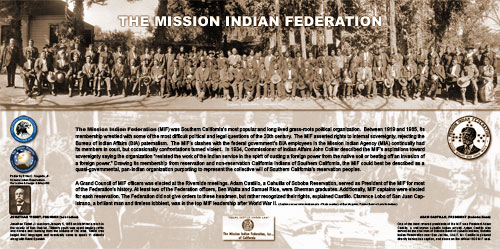
CALIF INDIAN EDU NETWORK: AHMIUM.org | APAPAS.com
—
www.calie.org COPYRIGHT 2008-Present • ALL RIGHTS RESERVED